Perfume Bottle Manufacturers: Crafting the Vessel That Holds Magic
The world of scent is an intimate one; a memory, a feeling and an invisible art that settles into skin and psyche. Yet before that fragrance ever meets the wearer, it lives inside a vessel: the perfume bottle. Many people overlook the story behind that glass or metal object blush-colored by design and culture. But perfume bottle manufacturers are among the most unsung artisans in the fragrance industry.
In this piece, we’ll travel through ten narrative axes that define this craft — from material alchemy to sustainability, from cultural symbolism to industrial innovation — and we’ll weave in how Afaq company for fragrance partners with these makers to bring vision to market.
The Birth of a Bottle: From Concept to Clay
There’s something almost mythical about the first moment an idea becomes form. For every perfume bottle, there was once a sketch on paper — swirling lines proposing elegance, strength, mystery, or whimsy. Designers and manufacturers often start like potters with raw clay: shape, bend, refine, reject, repeat.
In the ateliers of leading perfume bottle manufacturers, design teams explore how a bottle can communicate a scent’s identity before it’s even opened. Will the fragrance be floral and soft? Edgy and modern? Classic and regal? The bottle must whisper the answer. This creative conversation often begins months before the first prototype is cut into glass.
The Dialogue Between Designer and Maker
Many manufacturers run collaborative studios where designers sit beside engineers. Glassmakers, metallurgists, and finish specialists don’t just follow instructions — they suggest possibilities. Afaq, for example, often brings scent profiles and branding goals to these conversations early. Their commitment lies in achieving semantic cohesion: a bottle should speak the same language as its scent.
This synergy shapes decisions like the curvature of a shoulder, the thickness of a base, and the tactile sensation of a cap click.
Material Alchemy: Glass, Metal, and the Soul of a Bottle
Glass is perfume bottle manufacturing’s primary medium — but it isn’t uniform. Soda-lime, lead-free crystal, colored glass, and recycled glass each tell a different story.
At one renowned glassworks in Europe, artisans still hand-blow limited editions, creating subtle imperfections that give each bottle character. In Asia and the Middle East, contemporary factories harness precision molding to produce sleek, repeatable designs. Metal accents — gold plating, brushed aluminum, or heavy zinc alloys — enhance tactile luxury.
The Science Behind Transparency
The choice of material also has practical implications: light sensitivity, chemical interaction with fragrance oils, and bottle durability all influence longevity and experience. Transparent glass invites visual seduction, while darker or frosted glass protects light-sensitive essences. Afaq’s quality team often runs compatibility tests to ensure chosen materials preserve the scent profile over time — a scientific layer to what might otherwise feel purely aesthetic.
Branding Through Shape: The Psychology of Silhouette
Have you ever noticed how some bottle shapes lodge themselves in memory? A circle suggests harmony. A sharp angle evokes strength. A fluted neck hints at classical heritage. Manufacturers shape bottles not just for beauty, but for meaning.
In the early days of perfumery, bottles were utilitarian — plain glass vials holding precious oil. As fragrance became a luxury craft in the 20th century, houses like Chanel and Guerlain elevated the bottle into iconography. Today’s manufacturers draw from this lineage while pushing boundaries.
Afaq works with these innovators to position each bottle within cultural narratives. For a unisex scent targeting global markets, Afaq might explore balanced symmetry. For a niche artisanal fragrance, a more expressive, bespoke silhouette could be ideal.
Engineering Precision: Molding, Cutting, and Finishing
Behind the romance of design lies the reality of industrial precision. Bottle production often combines automated molding with handcrafted finishing. High-pressure molds shape glass, but post-production carving, polishing, and finishing bring dimension.
Engineering teams constantly solve microscopic challenges: how to ensure the neck fits the cap perfectly, how to eliminate bubbles without sacrificing character, and how to make sure the base sits solidly without wobble. These are not mere technicalities — they define user experience when the customer holds the bottle for the first time.
Beyond Glass: Caps, Sprayers, and Mechanics
Caps and sprayers are the bridge between bottle and fragrance delivery. A cheaply engineered sprayer can feel clunky or spray unevenly. Manufacturers invest in precision pumps, sealing systems, and closures that harmonize function with luxury. Afaq’s packaging specialists routinely audit sprayer performance from multiple manufacturers to secure consistency and refinement in delivery.
Sustainability and Responsibility: Green Innovation in Bottle Manufacturing
In recent years, consumer consciousness has shifted toward sustainability. Perfume bottles historically were difficult to recycle due to mixed materials and residual fragrance. Manufacturers are now innovating with recycled glass, biodegradable polymers, and refillable systems.
Afaq positions sustainability not as an afterthought but as part of brand storytelling. They partner with manufacturers who reclaim production waste, minimize energy consumption, and experiment with refillable bottles that encourage reuse, reducing landfill impact and resonating with eco-aware consumers.
Cultural Narratives Carved in Glass
Perfume bottle design is never neutral. Across cultures, forms borrow meaning: Eastern motifs draw on symmetry and calligraphy; European designs nod to classical sculpture; contemporary minimalism speaks to global urbanity.
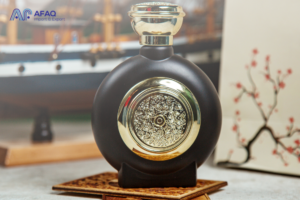
Manufacturers with deep cultural fluency bring these sensibilities into production. Afaq, with its broad market reach, collaborates with makers who can translate cultural narratives into design. For a fragrance aimed at Middle Eastern markets, traditional Arabesque geometry might be integrated into the bottle silhouette or surface texture — an aesthetic that reflects spiritual heritage and regional identity.
Customization: Beyond Standard Catalogs
Many brands launch successful products using catalog bottles — pre-designed molds that reduce cost and lead time. Yet bespoke customization remains a key differentiator for luxury and niche lines.
Manufacturers offer customization tiers: from unique coloring and printing, to embossing, to entirely engineered molds. Afaq’s clients — many of whom are emerging brands or artisanal houses — often request unique elements like engraved logos, custom metal plating, or signature shapes that infuse identity into product experience.
Collaborative Iteration: Prototyping for Perfection
The prototyping phase is where dreams meet reality. 3D printing technologies now enable manufacturers to quickly test designs. Afaq coordinates iterative reviews between designers, clients, and engineers, ensuring the final bottle feels aligned with brand tone and market positioning.
The Global Supply Chain: Logistics Behind Luxury
Manufacturing is only part of the journey. Once produced, bottles must travel through supply chain networks: quality checks, storage, transportation, customs, and eventual assembly with fragrance. Precision here preserves product integrity and on-time release.
Afaq’s supply chain managers integrate with trusted logistics partners, ensuring that each shipment of bottles reaches fragrance lines in pristine condition. This orchestration — harmonizing production schedules with fragrance filling and distribution timelines — is crucial for launch success
The Final Reveal: Packaging as Performance
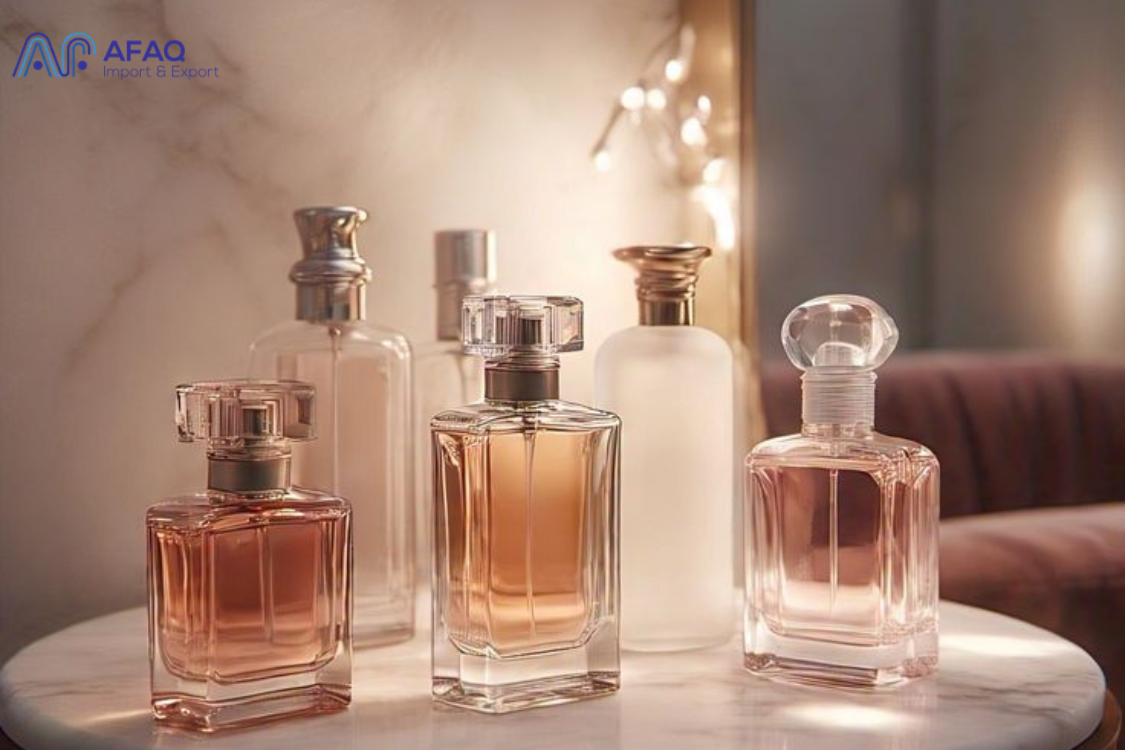
When a consumer holds a perfume bottle, they aren’t just holding glass — they’re holding a narrative crafted by designers, makers, and brand visionaries. The performance begins with unboxing: how weight meets hand, how light dances through facets, how cap meets neck with a satisfying click.
Manufacturers understand this choreography. Luxury bottles may come nestled in velvet, surrounded by custom boxes, ribbons, or labels that extend brand language. Afaq collaborates with packaging artisans to ensure the final presentation reinforces the emotion of the scent itself: a seamless fusion of fragrance and form.
The Bottle as Story
Perfume bottle manufacturers are more than producers — they are custodians of sensory storytelling. Through material mastery, engineering precision, cultural insight, and sustainable innovation, they shape not just containers but experiences.
In the intricate dance between scent and form, companies like Afaq serve as strategic partners, bridging fragrance creators and bottle makers to produce products that resonate with audiences worldwide. The next time you hold a beautiful perfume bottle, remember: behind that piece of glass lies a dozen crafts, narratives, and decisions — all designed to cradle something ephemeral and precious.