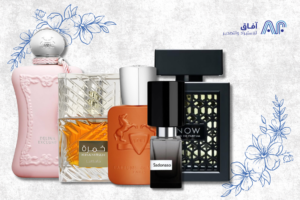
Egypt vs Gulf Fragrance Preferences: How Culture, Price and Lifestyle Shape Two Different Markets
A fragrance that feels perfectly natural in Cairo may create a very different impression in Riyadh, Dubai or Kuwait City.
In a busy Egyptian city, consumers may lean toward fragrances that feel easy to wear throughout the day: fresh fruits, clean florals, aromatic woods or warm notes presented with moderate intensity. In many Gulf markets, fragrance is often expected to create a stronger presence through oud, amber, musk, incense, leather and richer concentrations.
These differences do not mean that Egyptian consumers reject oriental fragrances or that Gulf consumers only buy heavy scents. Both markets are diverse, and younger audiences in particular are constantly reshaping traditional preferences.
The more useful conclusion is that the two markets often respond to different combinations of performance, price, identity and occasion. A fragrance manufacturer, wholesaler or emerging perfume brand should therefore avoid using exactly the same product and marketing strategy across both regions.
Understanding these differences is especially important for businesses sourcing fragrance oils in Egypt, developing regional product ranges or planning expansion into Gulf markets.
Fragrance as Daily Expression in Egypt
For many Egyptian consumers, perfume is closely connected to everyday routines. It may be worn before work, university, social visits or daily errands rather than being reserved only for formal occasions.
This creates demand for fragrances that feel noticeable without becoming difficult to wear in crowded spaces or throughout a long day. Fresh, fruity, floral and aromatic profiles often fit this pattern because they are easy to understand and can appeal to broad customer groups.
The Egyptian market also combines several influences. European-style perfumery remains important, particularly through French and Italian fragrance references, while oriental compositions continue to hold a strong cultural and commercial position.
The result is not a purely Western market or a purely oriental one. It is a hybrid environment where customers may buy a fresh citrus fragrance for daytime use, a sweet gourmand perfume for social occasions and a warmer amber or oud-led scent during winter.
Price sensitivity also shapes this behaviour. Many customers want a fragrance that performs well and feels attractive but remains accessible enough for regular use. This is one reason why inspired perfumes, perfume oils and locally compounded fragrances play such a visible role in the market.
Businesses targeting Egyptian customers can therefore benefit from offering a range that includes different concentration levels and several price points rather than concentrating only on premium, highly intense compositions.
Fragrance as Presence and Ritual in Gulf Markets
Across many Gulf communities, fragrance has a broader cultural role. It may be applied to the body, clothing, hair, home interiors and hospitality spaces. Perfume is often connected to social occasions, personal presentation and the rituals of welcoming guests.
This environment supports strong demand for compositions built around oud, amber, musk, incense, saffron, rose, leather and warm woods. High diffusion and long-lasting performance are frequently treated as important signs of value.
A powerful fragrance is not necessarily considered excessive in the same way it might be in another context. It can communicate confidence, refinement and generosity, particularly during gatherings, weddings, celebrations and evening events.
The use of bakhoor and concentrated perfume oils also means that many Gulf consumers grow up with a stronger familiarity with dense aromatic materials. Their expectations are not formed only by alcohol-based designer perfumes, but by a complete fragrance culture that includes incense, oils, home scenting and fabric perfuming.
For manufacturers, this means that a Gulf-focused fragrance may need more than an oriental note placed in the base. The composition often requires depth, a clear signature and a development that remains noticeable over time.
Climate Does Not Explain Everything
It may appear logical to assume that very hot climates should favour only light and fresh fragrances. In practice, cultural familiarity can be just as influential as temperature.
Gulf consumers may continue wearing rich oud, amber and musk compositions during hot weather because these materials are part of established fragrance traditions. Indoor environments are also widely air-conditioned, which changes the way fragrance is experienced during much of the day.
Egypt also has a hot climate, but everyday fragrance preferences are shaped by different social and economic conditions. Long commutes, crowded streets, public transport and frequent daytime use can make more balanced concentrations attractive to a wide segment of consumers.
Seasonality still matters in both regions. Fresh citrus, marine, aromatic and green compositions often gain attention during warmer months, while gourmand, amber, tobacco, leather and spicy profiles become more prominent during cooler seasons.
A manufacturer should therefore study climate together with lifestyle, usage environment and cultural expectations rather than treating temperature as the only factor.
Price and Perceived Value in the Two Markets
The Egyptian market: performance within a practical budget
In Egypt, many purchasing decisions are built around value. The consumer often compares scent character, longevity, bottle size and price before deciding whether a fragrance feels worth buying.
This does not mean that Egyptian buyers accept weak quality. It means that product performance must be convincing in relation to the amount paid.
A successful fragrance may therefore combine:
- Recognisable and appealing scent character.
- Reasonable longevity for its price category.
- Practical packaging.
- A price suitable for repeat purchasing.
- Clear communication about what the product offers.
This balance is especially important for local perfume brands and compounding shops. Overspending on packaging while reducing fragrance quality can damage repeat purchases, while concentrating only on the liquid without considering presentation may weaken the product’s commercial appeal.
The Gulf market: premium value and experience
Many Gulf fragrance consumers are willing to consider higher price points when the product offers rarity, concentration, presentation or a distinctive story.
Premium materials, luxurious packaging, limited editions and strong brand identity can all influence the purchase. The perfume is not evaluated only as a scented product, but as part of a wider luxury experience.
This creates opportunities for niche brands and high-concentration fragrances. However, a high price alone does not create premium positioning. The fragrance, bottle, packaging, retail environment and communication must support the same level of expectation.
Businesses entering Gulf markets should therefore avoid assuming that expensive automatically means suitable. The product still needs a clear reason to exist and a scent profile that feels relevant to the intended audience.
The Social Meaning of Fragrance
In Egypt, fragrance is often a form of personal expression. A customer may choose a fruity scent because it feels cheerful, a white floral because it feels elegant or a soft woody fragrance because it suits a professional image.
The choice is usually connected to mood, comfort, attraction and everyday identity.
In many Gulf settings, fragrance can also carry a stronger social message. The way a person perfumes clothing, enters a gathering or scents a majlis may contribute to how presence and hospitality are experienced.
Oud can communicate tradition and refinement. White musk may suggest cleanliness and understated elegance. Amber, saffron and incense can create a more formal or luxurious atmosphere.
This difference affects how fragrances should be marketed. Egyptian campaigns may perform well when they focus on versatility, attractive pricing and daily relevance. Gulf campaigns may require a richer narrative around materials, heritage, exclusivity and the complete sensory experience.
How Both Markets Are Changing
Neither market is fixed. Social media, fragrance reviewing platforms and global e-commerce have accelerated the exchange of taste between regions.
Gulf consumers are exploring niche perfumery
Many Gulf consumers are moving beyond the most familiar luxury names and searching for compositions that feel unusual or limited. Interest in niche fragrances supports demand for less conventional combinations, stronger storytelling and distinctive raw-material effects.
This does not replace the traditional popularity of oud, amber and musk. Instead, these materials are increasingly being presented through modern structures, unexpected contrasts and international niche aesthetics.
Egyptian consumers are becoming more open to stronger oriental profiles
At the same time, the Egyptian market has shown growing interest in sweet oriental, spicy, woody and gourmand fragrances. Popular reviews and viral product discussions have made customers more curious about compositions that may once have been considered too heavy for everyday use.
This creates an opportunity for businesses to introduce stronger profiles carefully rather than assuming that the Egyptian market only prefers light fragrances.
A balanced portfolio can include accessible fresh products alongside more expressive oriental and niche-inspired options. AFAQ regularly publishes market-related product updates through the AFAQ fragrance blog.
Home Fragrance and the Wider Scented Lifestyle
The difference between the two markets can also be seen beyond personal perfume.
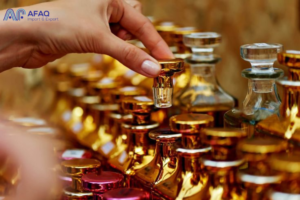
In Gulf markets, home fragrance is deeply integrated into daily life. Bakhoor, oud chips, incense burners, room sprays, concentrated oils and car fragrances may all form part of one household’s scenting routine.
Egyptian demand for home fragrance is also growing, although the category is still developing differently across customer segments. Air fresheners, reed diffusers, scented cleaning products and home sprays are becoming more visible as consumers begin to treat fragrance as part of interior comfort rather than only personal grooming.
This creates new opportunities for manufacturers working with home fragrance oils and scented home-care products.
The key is to adapt the fragrance to the application. A powerful oriental perfume oil may not perform in exactly the same way inside a room spray, detergent or fabric product. Manufacturers should evaluate compatibility, diffusion and stability according to the intended product base.
What These Differences Mean for Fragrance Manufacturers
The main lesson is not that one market prefers “light” fragrances while the other prefers “heavy” ones. That description is too simple for two large and changing consumer environments.
The practical lesson is that each market requires a different balance of product decisions.
For the Egyptian market
Manufacturers may need to prioritise:
- A clear value-for-money proposition.
- Versatile fragrances suitable for frequent use.
- Balanced diffusion and longevity.
- Several accessible price levels.
- A mix of familiar and emerging fragrance directions.
- Packaging that feels attractive without making the final price unrealistic.
For Gulf markets
Manufacturers may need to prioritise:
- Richer compositions with a strong identity.
- High-performing fragrance concentrations.
- Oriental, niche or material-led storytelling.
- Premium packaging and gifting potential.
- A complete sensory experience across perfume and home scenting.
- Distinctive products rather than generic oriental fragrances.
These priorities should still be tested against the exact country and customer segment. The UAE, Saudi Arabia, Kuwait, Qatar, Bahrain and Oman should not be treated as one completely uniform market, just as Cairo, Alexandria and other Egyptian markets may not respond identically to every product.
How AFAQ Supports Fragrance Businesses in Egypt
AFAQ supplies imported fragrance oils to perfume manufacturers, compounding businesses, personal-care producers, home-care manufacturers, wholesalers and other scented-product businesses in Egypt.
Its sourcing network includes DÜLLBERG KONZENTRA from Germany and Neo Parfum from France. Businesses can learn more about these relationships through the AFAQ partners page.
For companies serving the Egyptian market or studying wider regional opportunities, access to different fragrance directions makes it possible to compare fresh, floral, gourmand, woody and oriental profiles before deciding how each one fits a product range.
AFAQ’s role is most relevant at the sourcing stage: helping businesses access international fragrance oils and understand the available portfolio within the context of the product they intend to manufacture or sell.
Manufacturers can review AFAQ’s fragrance product lists, learn more about importing European fragrance oils into Egypt, or contact the company through the official contact page to discuss current availability.
Frequently Asked Questions
Do Egyptian consumers only prefer fresh fragrances?
No. Fresh, floral and fruity fragrances are important in Egypt, especially for daytime and warmer seasons, but demand also exists for oriental, gourmand, woody and stronger evening fragrances.
Do Gulf consumers only wear oud?
No. Oud is culturally and commercially important, but Gulf consumers also buy designer, niche, floral, gourmand, fresh and modern woody fragrances. The market is broad and increasingly diverse.
Why are strong fragrances popular in hot Gulf climates?
Cultural familiarity with oud, bakhoor, musk and concentrated oils plays an important role. Indoor air-conditioned environments and social fragrance rituals also influence how strong fragrances are used.
Is the Egyptian market mainly price-driven?
Price is important, but consumers also evaluate fragrance appeal, performance, packaging and brand trust. The strongest proposition is usually a clear balance between quality and affordability.
Can one perfume formula be marketed in both regions?
It is possible, but the concentration, product story, packaging, price and promotional strategy may need to change. Testing with the intended audience is more reliable than assuming one version will perform equally well everywhere.
What should a new brand consider before entering a Gulf market?
The brand should study the specific country, customer segment, distribution channel and price category. It should also assess whether the fragrance, packaging and brand story meet local expectations for performance and presentation.
Conclusion: Regional Success Begins with Understanding Context
The difference between fragrance preferences in Egypt and the Gulf is not simply a comparison between light and heavy perfumes.
It reflects the interaction of culture, spending behaviour, social rituals, climate, product use and the role fragrance plays in everyday identity.
Egypt often rewards products that combine attraction, versatility and practical value. Gulf markets frequently create stronger opportunities for intensity, material richness, luxury presentation and fragrance as part of hospitality and lifestyle.
Neither approach is better than the other. They represent different commercial environments that require different product decisions.
For fragrance manufacturers and brands, the opportunity lies in adapting rather than generalising. A business that understands why consumers use fragrance—not only which notes they say they like—is better positioned to build products that feel relevant, credible and commercially sustainable.
To explore imported fragrance oils for perfume, personal-care or home-care development in Egypt, businesses can contact AFAQ Fragrances and provide information about the intended product, target market and required fragrance direction.